



Landscaping a New Build: What to Plant and When
August 15th, 2027
The landscaper is usually the last trade on a new build, and that is the right order. The yard needs the grading, the utilities, the driveway, and the downspouts finished before anyone plants. A tree installed too early gets run over by a concrete truck. A bed installed before final grading gets buried.
Once the heavy work is done, landscaping is the fastest way to make a new house feel like a home. In Texas, it also has a better chance of surviving if the right plants go in at the right time.
Wait for Grading and Drainage
Final grading sets the slope away from the house. Planting before that happens means the beds and trees will be disturbed. It also means the drainage plan is still in flux.
Walk the finished grade after a rain. If water stands where a bed is planned, fix the grade before planting. A plant that sits in standing water will not last a season.
Plant in Fall
In most of Texas, fall is the best planting season. The soil is still warm, the air is cooler, and the roots have months to establish before summer. October through March is the window for trees, shrubs, and perennials. Summer planting is possible with careful watering, but it is more work and more risk.
Turf is the exception. Sod can be installed in warmer months if water is available. Seed is best in early fall.
Deal With the Soil
New construction often leaves compacted clay and a thin layer of topsoil. Dig a planting hole and look at what is there. If the hole holds water, the plant will drown. If it is hard as brick, the roots will circle.
Amend the planting area with compost, and break up the clay at the edges of the hole. For beds, a layer of compost worked into the top several inches helps. Do not create a small pocket of rich soil surrounded by hard clay and expect roots to leave it.
Choose Plants That Belong Here
Native and adapted plants handle Texas heat, drought, and soil with less water and fewer chemicals. A short list that performs well in many parts of the state:
- Texas sage and lantana for full sun and dry spots
- Salvia, coneflower, and black-eyed Susan for color
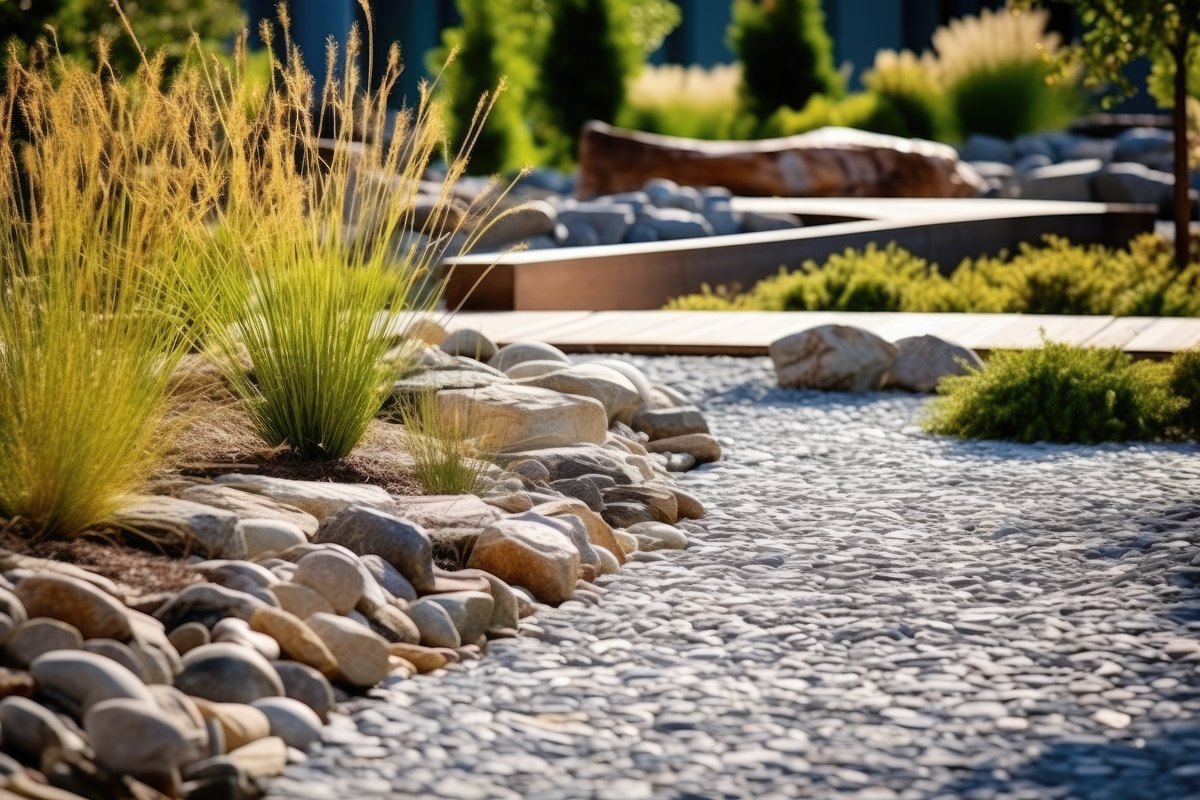
- Ornamental grasses such as muhly and inland sea oats
- Yaupon holly and wax myrtle for evergreen structure
- Live oak and cedar elm for shade, with room to grow
- Turk's cap and American beautyberry for shade and wildlife
Ask the local nursery what performs in your county. A plant that thrives in Houston may struggle in San Antonio, and the reverse is also true.
Lawn Choices
St. Augustine is common in humid areas and tolerates some shade. Bermuda needs full sun and more water. Zoysia is a middle ground. Buffalo grass is low-water but not as tolerant of foot traffic. Choose based on sun, water, and how the yard will be used, not on what the neighbor has.
Keep the lawn away from the foundation by at least a few inches. Soil and mulch should slope away, not pile up against the brick.
Trees and the Foundation
Trees are the most valuable landscape investment and the easiest to plant in the wrong place. Large shade trees should sit well away from the foundation, the driveway, the septic system, and the utility lines. Roots can lift concrete and find cracks in pipes.
Call 811 before digging. The free locate service marks utilities, and it is required by law in Texas before excavation in many cases.
Irrigation
Install irrigation before the beds and lawn are finished. A smart controller that adjusts to weather saves water and money. Drip zones for beds and separate zones for lawn keep the watering matched to the plant. Check that the system drains and that the backflow preventer is installed to code.
Budget and Phasing
Landscaping is easy to phase. The first year can cover the lawn, the front beds, the trees, and the irrigation. The backyard can wait. A phased plan avoids the temptation to buy small plants everywhere and end up with a sparse yard.
A common planning range is a few percent of the construction budget for basic landscaping, with more for a designed yard, a pool, or extensive hardscape.
Owner Builder Network reviews landscaping as part of the building options conversation, and the home building process page shows where site work and landscaping fit. The earlier article on water management on your lot covers the drainage decisions that come before planting.
Plant for the climate, not for the catalog. The yard that survives a Texas August is the one that was chosen for it.